Application engineering
Backend services, domain models, APIs and background processing written in maintainable, tested code.
Software engineering company
CLOCK TOWER EXPRESS LIMITED designs, builds and maintains software that organisations depend on every working day — custom applications, web platforms, cloud infrastructure and the integrations that hold them together.

01 — Introduction
CLOCK TOWER EXPRESS LIMITED is an independent software company. We work with organisations that have outgrown spreadsheets, manual processes or off-the-shelf tools and need software shaped around how they actually operate.
Our work usually starts with a conversation about a constraint: a process that takes too long, data that lives in three systems and agrees in none, a product idea that needs a first working version, or an application that has become expensive to change.
We write software in small, reviewable increments, keep the running system observable, and document decisions so the people who own the product after us can keep moving.
02 — Core capabilities
Backend services, domain models, APIs and background processing written in maintainable, tested code.
Web front ends built for real workloads: dense data views, forms that resist mistakes, and accessible interaction patterns.
Environments described as code, reproducible deployments, monitoring and sensible recovery procedures.
Connecting internal systems and third-party services so data moves once, reliably, in an agreed shape.


03 — Custom software development
Custom development is worth doing when a process is specific enough that a generic product forces awkward workarounds. We model the domain in the language the business already uses, then build the smallest system that removes the constraint.
04 — Web application engineering
Most business software now lives in a browser tab that stays open all day. We build web applications that hold up under that use: predictable navigation, fast rendering on ordinary hardware, readable typography and keyboard-accessible controls.
Pages that arrive complete, so content is available to browsers, assistive technology and crawlers without waiting on scripts.
Careful client and server state boundaries, cached reads, and explicit error and empty states.
Semantic markup, contrast that survives real screens, and layouts that reflow rather than break.
Budgeted asset sizes, appropriately sized images, and measurement rather than assumption.
05 — Cloud and infrastructure
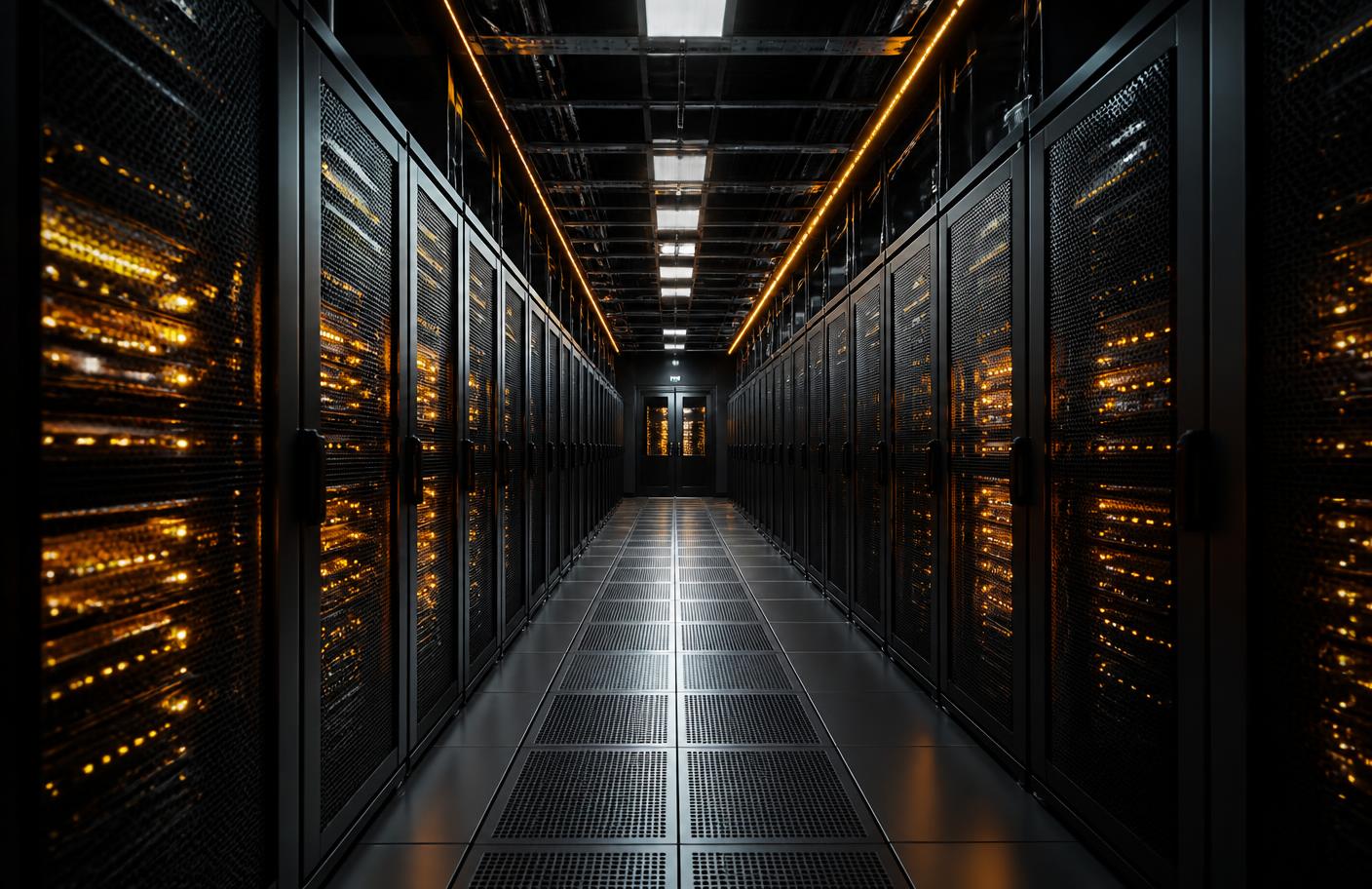
Infrastructure work is judged on quiet weeks. We describe environments as code so staging and production stay comparable, automate deployment so releases are routine, and add logging, metrics and alerts that point at causes instead of symptoms.
Backups and restore procedures are written down and exercised, not assumed. Where an existing setup was grown by hand, we document it first and change it incrementally.

06 — Integration and automation
Integration work removes the copy-and-paste layer between tools. We map the data each system owns, agree on a single source of truth for every field, and build synchronisation that is idempotent and safe to re-run.
REST and event-based interfaces, scheduled jobs, file exchanges and webhook endpoints with verified callers.
Retries, dead-letter handling, reconciliation reports and clear logs of what moved and when.
07 — Quality and security
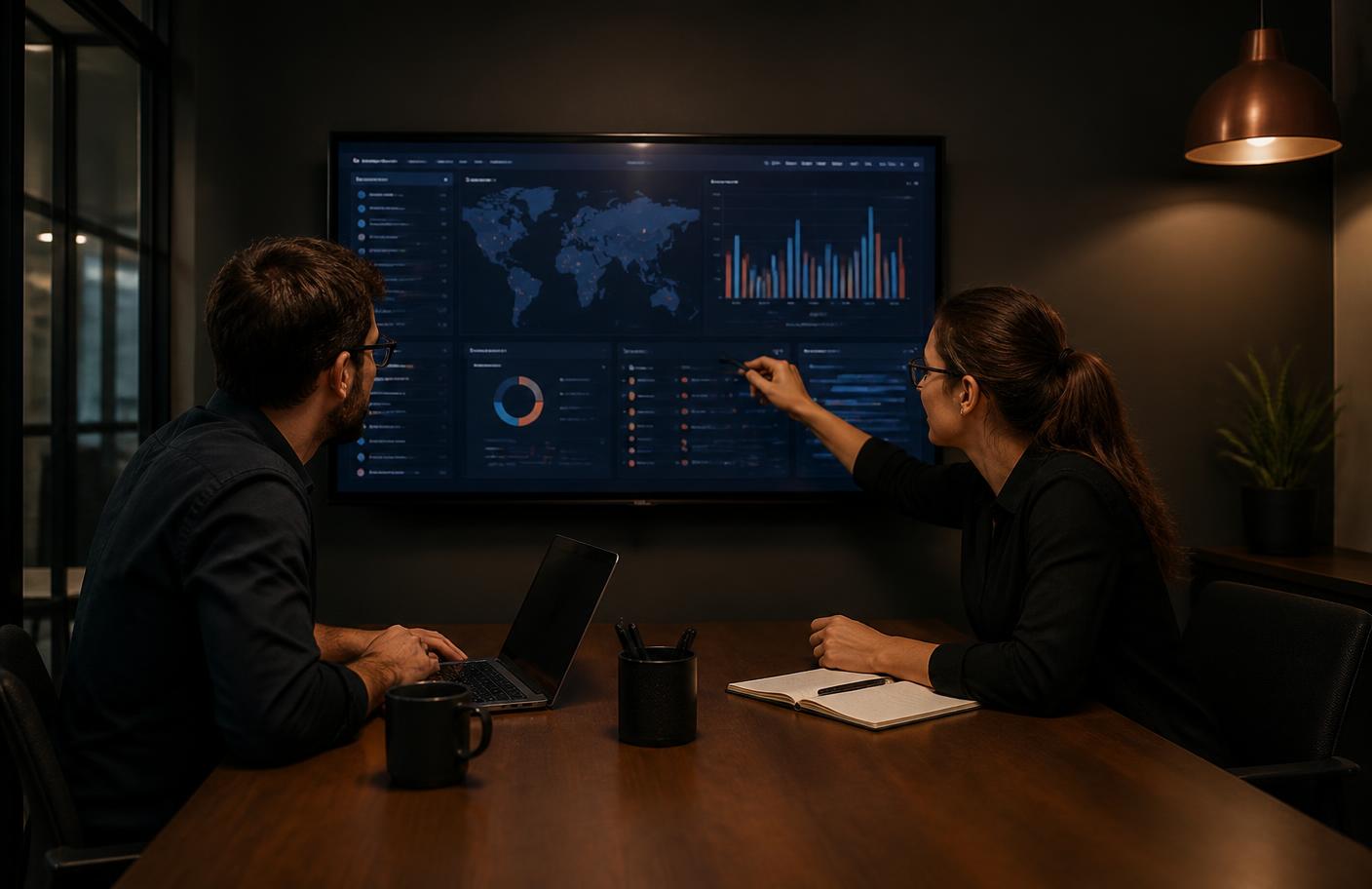
Unit, integration and end-to-end tests chosen for the risk they cover, running on every change.
Every change is read by another engineer before it merges, with the reasoning recorded.
Least-privilege access, dependency and secret scanning, input validation, and encrypted data in transit and at rest.
08 — Industries and challenges
Scheduling, dispatch and tracking workflows where timing and accurate status matter more than presentation.
Client records, project delivery, time capture and reporting spread across tools that do not talk to each other.
Catalogue, order and stock data that must stay consistent between a storefront and back-office systems.
Reports assembled by hand each month that need to become a dependable, repeatable pipeline.
Systems that still work but resist change, where the goal is safe, gradual modernisation rather than a rewrite.
Early-stage ideas that need a first usable version, built so it can be extended if it proves out.
09 — Delivery process
The sequence stays the same whatever the size of the engagement. What changes is how long each step takes.
We learn the process, the constraints, the systems already in place, and what success would look like in practical terms.
A written description of what will be built, what is deliberately excluded, and the assumptions the plan depends on.
Data model, interfaces and architecture sketched and reviewed before implementation, so disagreements surface early.
Short cycles, each ending in software you can open and use, with tests and code review on every change.
Automated checks, exploratory testing and review against the agreed scope in an environment that mirrors production.
A rehearsed deployment, monitoring in place, and a documented handover to whoever operates the system.
10 — Engineering principles
The straightforward solution is preferred until measurement shows it is insufficient.
Well-understood technologies with long support horizons, chosen over novelty.
Changes are small enough to review, deploy and roll back without drama.
Architectural choices and their trade-offs are recorded where the next engineer will find them.


11 — Collaboration
Projects fail on communication more often than on code. We agree at the start who decides what, how often we report, and where questions get answered — then keep to it.
12 — Questions and answers
With an email describing the problem. We reply with questions, arrange a call, and if the work looks like a fit we write a scope document before anything is built.
Yes. We often begin by reading an existing system, documenting how it behaves today, and making small safe changes before larger ones.
We select per project from mainstream, well-supported languages, frameworks, databases and cloud platforms, and explain the reasoning before committing.
Ownership of the delivered source code and related documentation is agreed in the contract before work starts.
Yes. We can take a defined component, join an existing process, or provide review and infrastructure support alongside your engineers.
Maintenance is arranged separately and can cover dependency updates, monitoring, incident support and continued development.
13 — Contact
Describe the problem, the systems involved and the outcome you are aiming for. We reply with questions before proposing anything.